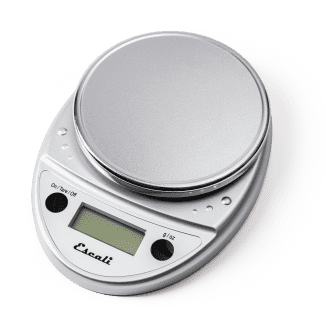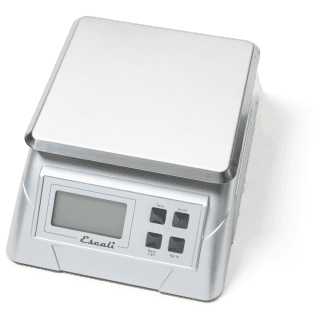





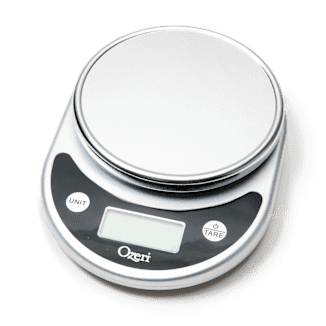
Digital scales measure ingredients by weight to guarantee accuracy. Our winner is the OXO Good Grips 11 lb Food Scale with Pull Out Display. It’s fast and accurate within a couple grams, which is enough for most cooking needs. The removable platform makes for easy cleanup and the large, backlit display can be pulled away from the platform so you can put a big bowl on top and still see the screen. Our Upgrade Pick is the ThermoWorks Gravitas Precision Kitchen Scale. It’s more accurate, to ±0.7 gram, as certified by the National Institute of Standards and Technology (NIST). It can measure to a tenth of a gram and up to 11 pounds, so it can function as a coffee scale (which requires more precision) and a regular kitchen scale. The display screen detaches completely for visibility and is held on by magnets when in place. We also chose a Best Buy, the Ozeri Pronto Digital Multifunction Kitchen and Food Scale. While it doesn’t have any extra features and isn’t as sturdy, it’s a good, accurate, and (much) less expensive option.

A digital scale is a game changer in the kitchen. A scale is critical for baking recipes, where measuring dry ingredients by weight is the only way to guarantee accuracy. We’ve proven this in tests where we’ve repeatedly measured a cup of flour by volume, using a “dip and sweep” method, and found that there can be up to a 20 percent difference in the weight—a variance that can mean the difference between a cake that’s squat and dense and one that’s fluffy and tender.

Scales have many applications in cooking too. Using one to portion burgers, for example, means no more guessing if the patties are the same size and will thus cook at the same rate. They can even make cooking and cleaning more efficient, thanks to the help of the "tare" function. Instead of dirtying different measuring cups or spoons to get the right amount of each ingredient, you can measure ingredients directly into your mixing bowl, pushing the tare button between each ingredient to reset the displayed weight on the scale to zero.
We tested a variety of consumer-grade scales with maximum capacities from 9 to 15 pounds, as we find this to be the most useful size for most cooks. All of the scales we tested except for one have a resolution of 1 gram, meaning they can display weights in 1-gram increments. This does not mean, however, that they reliably detect weight differences of a single gram. A range of ±3 grams is common and acceptable for most cooking, and most consumer-level scales don’t specify their accuracy range. The outlier is a new scale from Thermoworks, the Gravitas, which measures to a tenth of a gram and has a certified resolution of ±0.7 grams.
What to Look for
- Accuracy: All of the scales were acceptably accurate, measuring within a gram or two of the correct mass when we tested them with calibrated lab weights. A couple consistently displayed fluctuating readings, but even those were just a few grams off the mark. This is accurate enough for most kitchen needs. Our Upgrade Pick stands apart with a certified accuracy to ±0.7 grams, a higher level of precision that makes it also suitable for weighing coffee beans, which are measured to the gram, a task most kitchen scales can’t do.
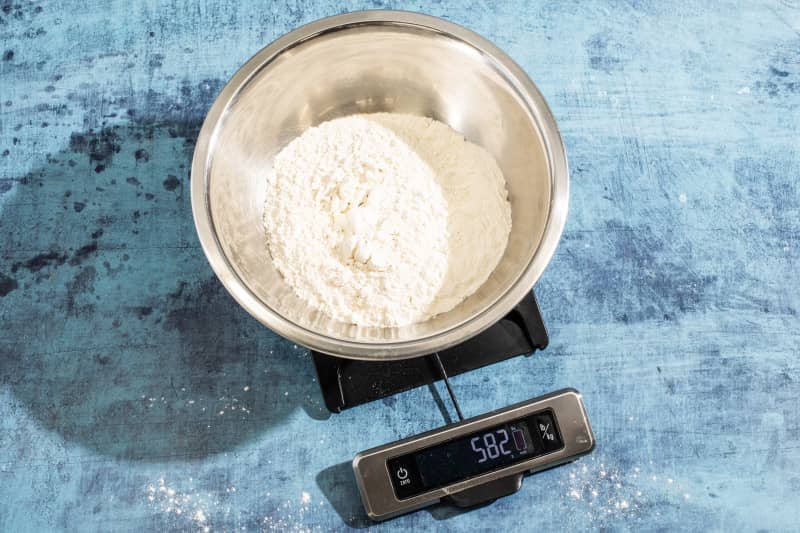
- Easy-to-Read Display: The best digital scales had displays that showed their measurements in large, bold numbers. They also had displays that we could see, even with a large bowl on the measuring platform. Our overall winner has a display that can be pulled out four inches from the platform, ensuring the screen is visible under even bulky items. Our Upgrade Pick’s display can be removed completely; it’s connected by magnets. This allowed for exceptional visibility and easier cleaning, because it doesn’t have a tether to clean around, like our winner.
- Easy and Intuitive Use: We liked scales with simple, intuitive interfaces that made it easy to power on, switch between grams and ounces, and tare.
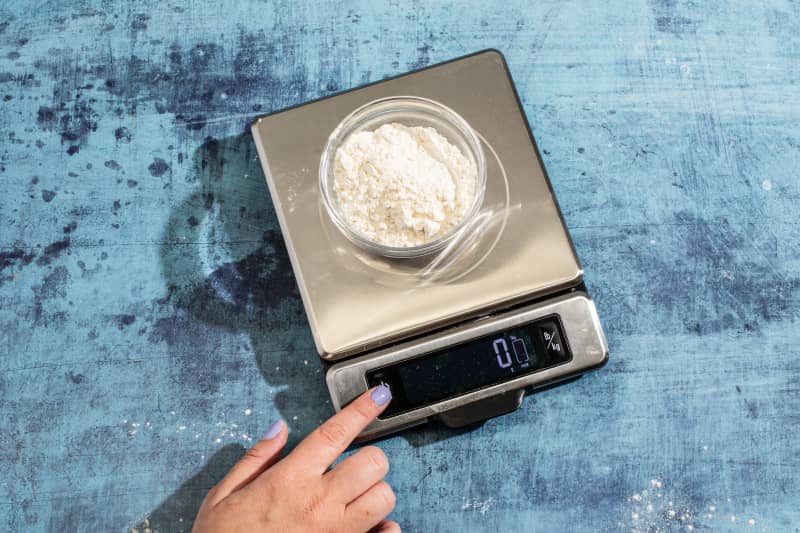
- Moderately Heavy, Flat Design: When it came to countertop stability, scales weighing more than 1 pound stayed put more reliably. Flat, slim models were also more stable and were easier to store.
- A Removable Platform: We preferred models that allowed us to take off their platforms for easy cleanup. Models with fixed platforms and hard-to-reach crevices trapped flour and made us worry that cleaning spray or soapy water might get into the machine and risk damage.

This Kitchen Scale Will Improve Your Cooking
There’s a reason we stock dozens of these ATK recommended scales in the test kitchen.
Learn MoreWhat to Avoid
- Inaccuracy: We expect consumer-grade kitchen scales to be accurate within 3 grams of the correct weight. While all the models we tested were accurate within this range, we preferred models that stayed closer to the correct value.
- Hard-to-Read Displays: Legibility was problematic on models with tiny, hard-to-read, or obscurely labeled buttons but was even more of an issue on scales where the control panel was flush with the platform rather than set into a separate part of the scale body. No matter how big and crisp the display was on these scales, larger bowls cast a shadow over, or completely blocked, the screen, forcing us to bend down to peer underneath or nudge the bowl backward until it threatened to fall off the back end of the platform.
- Difficult Operation: Some scales were so unintuitive to operate that we can’t recommend them. Users fumbled around for a switch or button to change the unit of measurement from grams to ounces. On one of the losing models, this was a tiny toggle on the underside of the scale underneath the battery cover, which we only found once we referred to the owner’s manual. On another, you must gently press the “on/off” button as the scale powers up—and if you miss that brief window, you have to turn it off and start all over.
- Light Weight or Feet: Models weighing less than a pound or that had feet frequently teetered back and forth or slid around on the counter.
The Tests:
- Check accuracy using 30-, 200-, and 500-gram lab weights
- Turn on scales, measure flour in large bowl, switch units, tare weight
- Drop models from height of 2 inches, then check accuracy again
- Stain with mustard, tomato paste, and canola oil; dust with flour; then clean
How We Rated
- Accuracy: We rated the models on how accurately and consistently they measured different masses, giving preference to models that consistently provided measurements within 3 grams of the correct mass.
- Ease of Use: We rated the models on how easy they were to turn on, navigate, and use with different vessels. We also evaluated the legibility of the display and the ease with which we were able to switch between units.
- Cleanup/Durability: We evaluated the models on how easy they were to clean and on how well they withstood light drops.