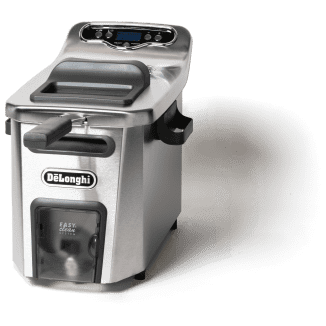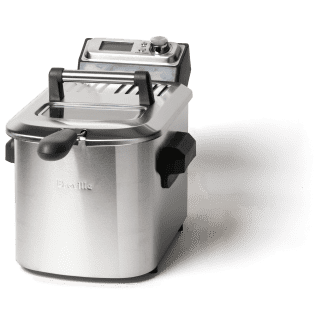


If you do a lot of frying, a good electric deep fryer can make it easier and tidier. Our winner is the T-Fal Ultimate EZ Clean Fryer. It’s neat and simple to use, offers effortless temperature control, and can cook just as much food in one batch as a Dutch oven can.

Electric deep-fryers promise to take the fear out of deep frying by making it easier, safer, and less messy than frying in a Dutch oven. The machines are essentially metal bins with an electrical heating element suspended inside: You pour oil up to a maximum fill line, turn the machine on, and, in most cases, set the desired temperature for the oil. Once the oil is ready, you lower the food into the oil (usually via a basket) and often stick on a lid, which helps contain any messes and supposedly contains unwanted odors.

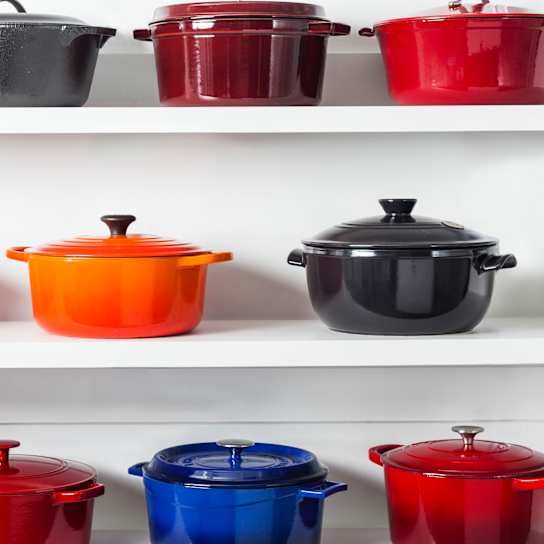
Still, most of these fryers are fairly big—about the size of a toaster oven. Do they offer enough advantages to warrant a spot in your home? We pitted them against our tried-and-true Dutch oven, cooking everything from frozen mozzarella sticks and fried chicken to tempura and doughnuts to see if they’re worth adding to your kitchen.
How Do Electric Deep Fryers Compare to Frying in a Dutch Oven?
- Limited Temperature Range: In most cases, we fry at temperatures between 325 and 375 degrees. Used in this range, every model performed well, with food emerging crispy, well-browned, and evenly cooked. However, none of the models we tested can heat above 385 degrees. Unless you plan on doing a lot of high-heat frying, this won’t be too much of a problem. But foods meant to be cooked at temperatures closer to 400 degrees, such as tempura, turned out a little greasier than tempura that had been fried at the correct temperature in a Dutch oven.
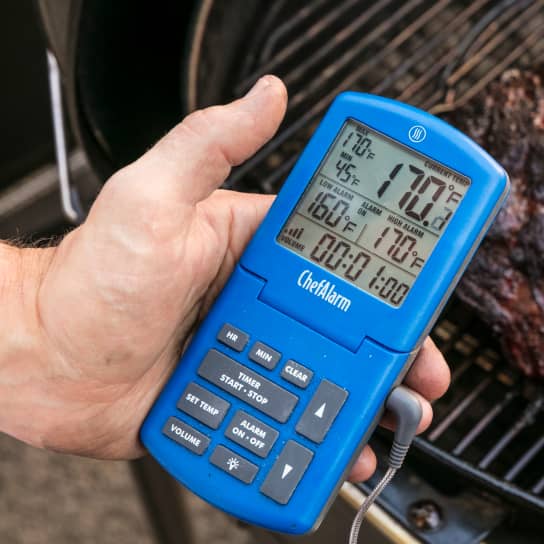
- Easy, Accurate Temperature Control: Maintaining a precise temperature is key when it comes to frying. Using probe thermometers to check the temperature of the oil, we found that most of the machines heated to within 5 degrees of the temperature we had selected on their dials or digital consoles. And most models did a good job of letting us know when the temperature had been reached, either with a beep or by turning an indicator light on or off. Only one machine had no temperature control or indicator, heating to a single temperature of around 375 degrees and giving us no sign when the oil was ready; as with a Dutch oven, we had to use a probe thermometer to keep an eye on the temperature.

- Quick Heating and Good Heat Retention: Fitted with heating coils, electric machines heat oil fairly quickly. Depending on how much oil the machine holds (from 6 to 22 cups), most take from 10 to 17 minutes to bring it all up to 350 degrees, compared with about 20 minutes for the standard 12 cups of oil that we heated over medium-high heat in our heavy, thick-walled, enameled cast-iron Dutch oven.
Electric deep fryers also do a great job of maintaining their heat. Those we tested rebounded to the desired temperature just as quickly as a Dutch oven. They also regulated the temperature without requiring us to adjust the heat, as we have to do when deep-frying on the stovetop. This set-and-forget temperature control gives deep-fryers a significant advantage, making it easier to fry without worrying that the oil will overheat or that the temperature will fluctuate too much.
- Less Kitchen Cleanup, More Machine Cleanup: Frying in a Dutch oven can require a commitment to deep-cleaning your kitchen afterward, as oil can spatter all over your range, counter, exhaust hood, and/or surrounding cabinetry. By contrast, most electric deep-fryers do a great job of containing those splatters. They have relatively high walls, so food and oil sit fairly low. Most also come with lids to contain splatters.
A few machines had a small advantage over a Dutch oven: They featured built-in filters through which oil could be drained, eliminating the need to dirty extra tools. But with most electric deep-fryers, you’re still going to have to get out a strainer and a coffee filter to clean the oil after every session. And filters can’t take away from the bigger problem: Once the oil is filtered and removed, you’re still going to have to clean the machine itself. Most of these fryers have a lot of parts, which get covered in oil and/or debris during cooking. The lids, bins, and baskets are usually dishwasher-safe, but they often require some scrubbing or detailing to get out any stuck-on bits of food. The control consoles and heating elements must be carefully cleaned by hand. By contrast, the cleanup after frying in a Dutch oven is pretty simple: Just wash the pot, probe thermometer, and whatever tool you used to fish out your food.


Electric deep fryers have high walls that help contain splatters. Some even have lids, which effectively minimize messes.
- Baskets Have Pros and Cons: Electric deep fryers typically come with a basket, which allows you to move whole batches of food into and out of the hot oil safely. Plus, when the food is done, the basket can be hooked onto a tab high on the fryer’s interior wall, allowing excess oil to drain off the food and back into the bin. This proved especially useful when we fried chicken: With the chicken pieces sitting securely in the basket, it was easy to check their interior temperature. When we fried chicken in the Dutch oven, the same task was more precarious as we juggled hot chicken with a spider skimmer in one hand and a thermometer in the other.

The surface area of the basket, rather than volume or depth of oil, determines the fryer’s functional capacity. For many applications, you may need to fry food in a single layer to minimize sticking or to prevent foods from becoming misshapen. Our favorite Dutch oven has a total surface area of about 97 square inches. By contrast, most of the fry baskets we tested had a usable surface area of just 50 to 60 square inches. The smaller surface area made it harder to reach in and flip food to ensure even cooking, and it required an extra batch or two to get through the entire yield of a recipe. When you’re frying for only a few minutes, an extra batch isn’t a big deal. But when you’re frying food that takes longer, such as chicken, extra batches can really extend your cooking time. Our winning fryer has a large basket that provides 84 square inches of usable space, holding almost as much food and completing every recipe in about the same time and number of batches.
If you fry foods only occasionally, there’s no need to invest in anything beyond a sturdy Dutch oven and a few essential kitchen tools. But if you love to deep-fry and want to do it regularly, we think our winner is a great option. In addition to churning out crisp, delicious fried foods, it offers effortless oil-temperature control and helps keep the kitchen clean.
The Tests
- Fried frozen mozzarella sticks
- Made Classic French Fries
- Made North Carolina Dipped Fried Chicken
- Made vegetable tempura
- Made cider doughnuts
- Filtered and cleaned after each use
How We Rated
- Cleanup: We evaluated how much machines splattered during use, how simple it was to filter oil, and how easy it was to clean the machines themselves.
- Performance: We rated how well machines were able to produce large patches of evenly browned, crisp foods.