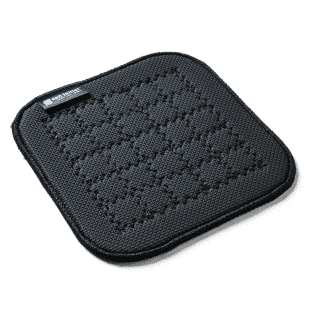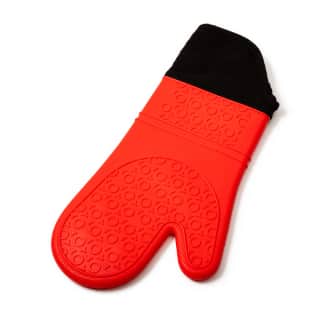



A good set of oven mitts or pot holders makes cooking easier and safer, protecting your hands from hot cookware without being too bulky and cumbersome. Our favorite oven mitt is the OXO Silicone Oven Mitt. It offers great protection from heat not just for your hands but also for your wrists and lower arms. If you prefer pot holders, we recommend the OXO Good Grips Silicone Pot Holder. Both are made from flexible material and are easy to slip on quickly.

In the test kitchen (and most professional kitchens), many cooks reach for clean, dry kitchen towels to hold hot pots and pans. But many folks don’t want their towels to do double duty. They prefer traditional oven mitts and pot holders made of thicker, more protective material that offer full coverage of hands and wrists. With a good pair, you don’t need to worry about burning your hand on a hot skillet handle or dropping a stockpot full of boiling water on your way from the stovetop to the kitchen sink. Oven mitts and pot holders also require dexterity and the ability to grab thin edges of pans or cramped handles. Unfortunately, a bad pair can be clunky or provide too little protection from the heat. We tested a range of options in both styles to find which pair deserves a spot in your kitchen.
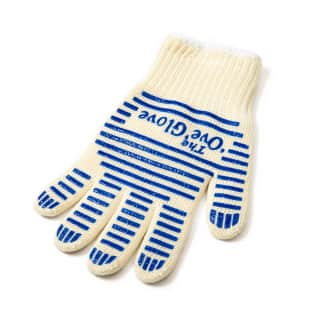
We tested a wide assortment of products, including oven gloves woven from synthetic fibers; products made from thick, padded fabric; and models with flexible silicone.


Heat protection is a must when handling scalding hot items in the kitchen. Whether you’re a pot holder person or oven mitt devotee comes down to personal preference.
What to Look for
- Sufficient Heat Protection: The number one job of oven mitts or pot holders is to be protective. To put them to the test, we heated a cast-iron skillet until its handle was a scorching 320 degrees and timed how long we could comfortably grip it with each model. With some, we could comfortably hold the hot handle for only 6 seconds. The best models kept our hands comfortably cool for more than 18 seconds. The difference came down to materials and construction. With models made from open-weaved synthetic fibers, such as the oven gloves, heat was able to penetrate through. For the models made primarily from cotton, thicker was better; the only one of these that we liked was fairly thick at 5 millimeters. The best and most protective mitts and pot holders were made mostly from silicone, which doesn’t need to be as thick and bulky as fabric to be protective.

- Flexible Material and Secure Fit: While mitts and pot holders need to be thick enough to be protective, they also need to be flexible enough to hold pots and pans without getting in the way. With overly roomy mitts or pot holders, testers’ grip on hot kitchen equipment felt unsteady. With some silicone mitts and pot holders, the rigid outer material didn’t flex when we scrunched our fingers, becoming bulky when we wrapped our hands around a piece of equipment. The thumb of some mitts was positioned in the center rather than at the side, which some testers found to be less versatile and less intuitive; they had to pause and think about how to orient their hands before reaching for an item. Of the oven mitts, we preferred more streamlined, classically designed options because they were easy to put on and fit us securely.


Our favorite models (including the one on the left) were streamlined and flexed with our hands. Some (like the one on the right) were too bulky, which made us feel clumsy and our movements feel imprecise.
- Durable, Easy-to-Clean Construction: Heat travels quickly through moisture and grease and can lead to burns, so regularly cleaning your oven mitts or pot holders is not only a question of aesthetics but also one of safety. It’s important that they are sturdy enough to withstand regular washing. Every model was susceptible to stains, but the bigger differences arose from how well they stood up to cleaning. Our favorite models were machine washable and showed no signs of wear and tear. That said, none of the models are meant to withstand long exposure to high temperatures. Read our FAQ to learn more.
What to Avoid
- Double Mitts: One “innovative” style of oven mitts consisted of pot holder–shaped ends tethered together by one long piece of material. Unfortunately, there was no clear advantage to this style. When we used both hands to carry an item, the connecting strips of fabric that were supposed to protect our forearms from heat drooped ineffectually between them. And when we needed to use our hands for two different tasks, such as holding a skillet handle while stirring a pan sauce, we had to work with our hands awkwardly bound together or opt to cover one hand and let the other mitt dangle dangerously from our wrist.

The Tests
- Rotate and remove a cookie sheet full of cookies from the oven
- Remove a Dutch oven filled with boiling water from a hot oven, then pour the water into the sink
- Maneuver a full pie plate into and out of the oven
- Rotate and remove a full cake pan from the oven
- Transfer a hot cast-iron skillet, weighed down with a 4-pound roast chicken, from the stovetop to the oven and back again
- Heat a cast-iron skillet until the handle registers 320 degrees, then time how long we can comfortably grip the skillet’s handle
- Compress each mitt and measure its thickness
- Stain each mitt with 1 tablespoon of turmeric-spiked marinara sauce, set it aside for 24 hours, and then launder it five times according to the manufacturer’s directions
How We Rated
- Performance: We noted if models kept our hands cool during real-life kitchen tests and timed how long we could comfortably hold the handle on a hot cast-iron skillet.
- Ease of Use: We rated the models on how easily we could put on the mitts or pot holders and how well we were able to lift, hold, and maneuver hot equipment while wearing them.
- Durability: We considered how easy the models were to wash and dry and evaluated them for signs of damage.