Low-Fat Chocolate Mousse
ByPublished on November 6, 2011
Time
30 minutes, plus 12 hours chilling
Yield
Serves 4

Ingredients
Before You Begin
The meringue and chocolate mixture are combined in 2 stages so the meringue doesn't collapse. For the best texture, chill the mousse overnight. This recipe contains raw or undercooked eggs, which comes with inherent risks. To learn more about food safety, check out this guide.
Instructions
- Melt semisweet chocolate, white chocolate, cocoa powder, 6 tablespoons water, and vanilla in medium bowl set over pot of barely simmering water until smooth. Set aside to cool slightly.
- Bring 1/2 cup water and sugar to vigorous boil in small saucepan over high heat. Boil until slightly thickened and large bubbles rise to top, about 4 minutes. Remove from heat while beating egg whites.
- With electric mixer on medium-low speed, beat egg whites in large bowl until frothy, about 1 minute. Add cream of tartar and beat, gradually increasing speed to medium-high, until whites hold soft peaks, about 2 minutes. With mixer running, slowly pour hot syrup into whites (avoid pouring syrup onto beaters, or it will splash). Increase speed to high and beat until meringue has cooled to just warm and becomes very thick and shiny, 2 to 3 minutes.
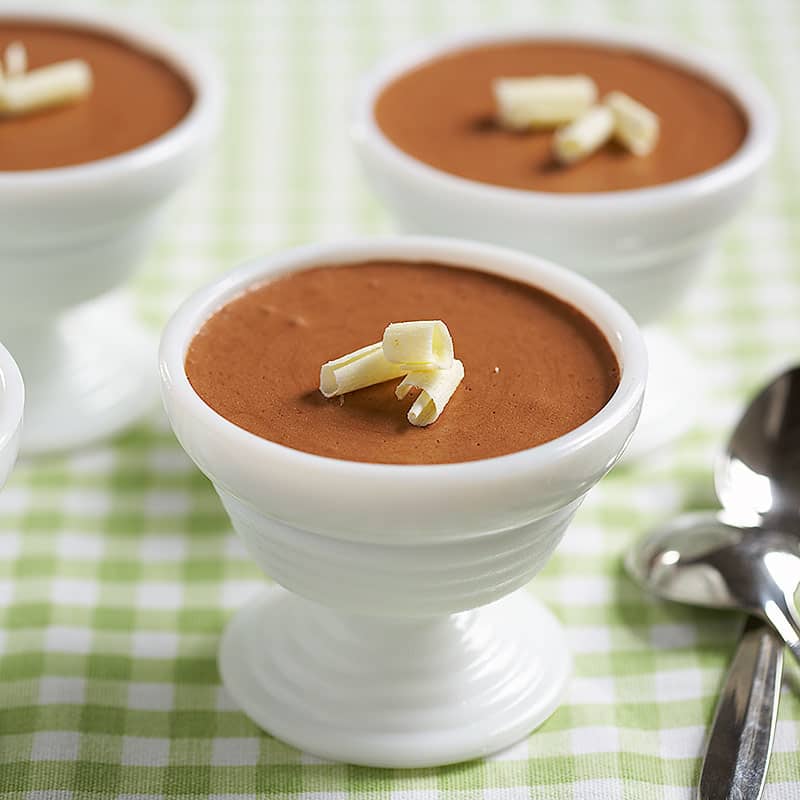
- Whisk 1/3 meringue into chocolate mixture until combined, then whisk in remaining meringue. Spoon mousse into six 6-ounce ramekins or pudding cups, or large serving bowl. Cover tightly with plastic wrap. Chill overnight. (Mousse can be refrigerated for up to 4 days.)
Time
30 minutes, plus 12 hours chillingYield
Serves 4Ingredients
Test Kitchen Techniques
Ingredients
Test Kitchen Techniques
Ingredients
Test Kitchen Techniques
Why This Recipe Works
Traditional chocolate mousse has a rich chocolate flavor and an irresistibly silky, fluffy texture. We wanted to do the impossible: Maintain the taste and consistency of a decadent dessert in a low-fat version.
The majority of low-fat mousse recipes replace the whipped cream with low-fat dairy products. When part-skim ricotta, tofu, low-fat yogurt, and light cream cheese all failed to give us the light and silky texture we wanted, we left low-fat dairy behind.
Marshmallow Fluff didn’t work either, but it reminded us of the technique used to make Italian meringues. We tried it, beating egg whites in a mixer until fluffy and then “cooking” them by adding a hot sugar syrup. This fat-free mixture was voluminous and creamy—the perfect base for our mousse. Next we folded in melted chocolate (for richness) and cocoa powder (for intensity) and chilled our mousse. The texture stayed perfectly creamy and light, but tasters complained that the flavor was harsh and one-dimensional. Scaling back the amount of chocolate diminished the flavor but not the harshness, while different combinations of semisweet, bittersweet, milk, and unsweetened chocolate failed to round out the flavor. The answer was the one chocolate we hadn’t tried: white chocolate. It worked because white chocolate isn’t really chocolate at all; it’s mostly fat and sugar. It turns out that chocolate and cocoa need some fat to temper their harshness and develop a full, well-balanced flavor. A little white chocolate has enough fat to mellow the flavor and adds just 10 calories to our low-fat dessert.




5 Comments