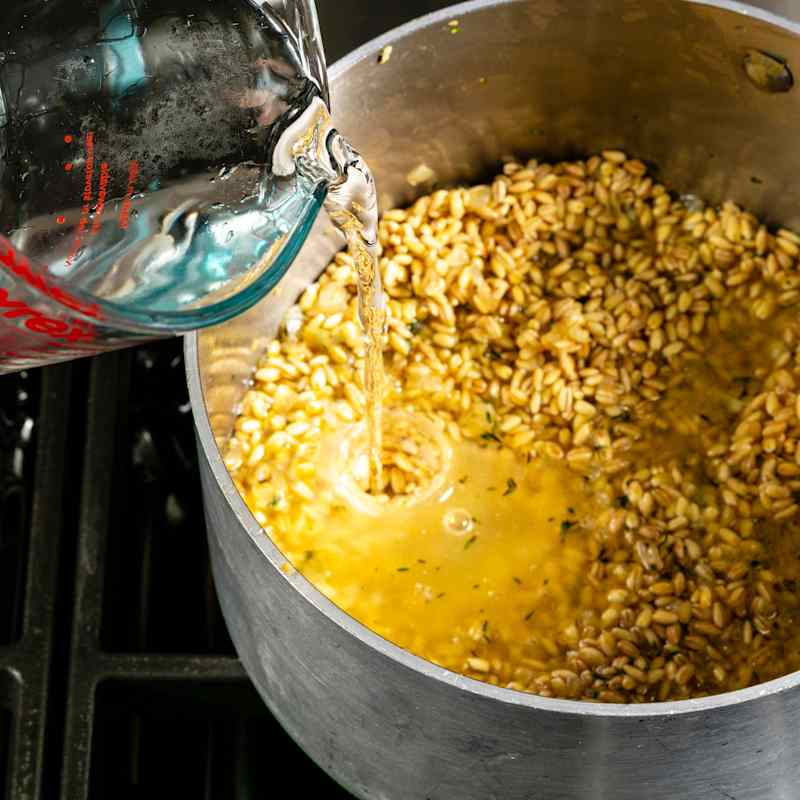
Cooking Grains on the Stovetop

Well-cooked grains are the foundation of a good grain bowl; use this chart to determine the amount of water and salt, and the cooking time needed to prepare 1 cup of grains. (Note: The amount of salt will vary in recipes with other ingredients, so read specific recipes carefully.)
If using the absorption or pilaf methods, grains should first be rinsed and dried well. You can cook 2 or 3 cups of raw grains using the pasta method with no changes to the water or cook time. You can cook 2 cups of grains using the absorption or pilaf method by doubling the amount of water and salt; the cooking time might require a few extra minutes.
Barley

Rinse? Yes
Methods: Pasta
Water: 4 quarts
Salt: 1 tablespoon
Time: 20-25 minutes
Yield: 3½-4 cups
Bulgur, coarse-grind

Rinse? Yes
Methods: Absorption
Water: 1 cup
Salt: ½ teaspoon
Time: 13-18 minutes
Yield: 2¼ cups
Farro

Rinse? Yes
Methods: Pasta
Water: 4 quarts
Salt: 1 tablespoon
Time: 15-20 minutes
Yield: 3 cups
Millet

Rinse? Yes
Methods: Absorption or pilaf
Water: 2¼ cups
Salt: ¼ teaspoon
Time: 25-30 minutes
Yield: 2¼ cups
Quinoa

Rinse? Yes
Methods: Absorption or pilaf
Water: 1 cup
Salt: ¼ teaspoon
Time: 16-18 minutes
Yield: 2¾ cups
Wheat Berries

Rinse? No
Methods: Pasta
Water: 4 quarts
Salt: ¼ teaspoon
Time: 1 hour
Yield: 3 cups
Couscous

Rinse? No
Methods: Pilaf
Water: 1 cup
Salt: 1 teaspoon
Time: 7-10 minutes
Yield: 3 cups
Steel-Cut Oats

Rinse? No
Methods: Absorption
Water: 4 cups
Salt: ¼ teaspoon
Time: 10 minutes after overnight soak
Yield: 3 cups