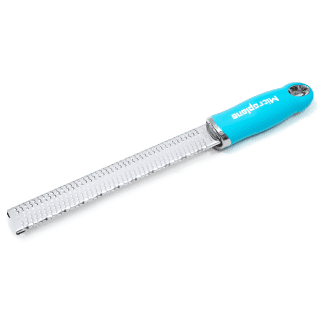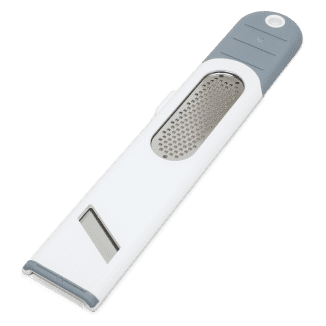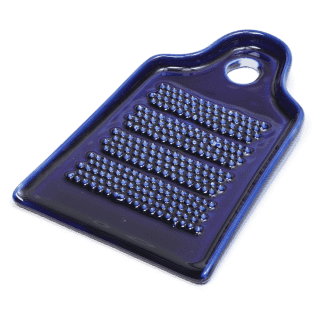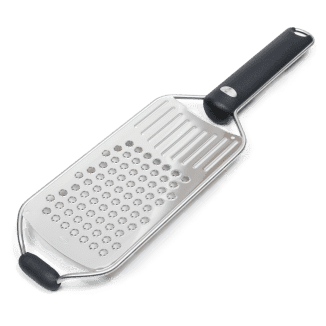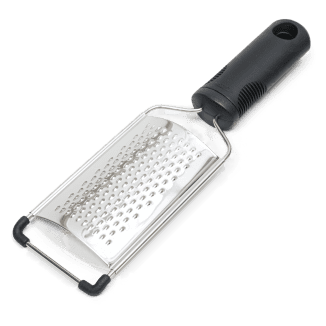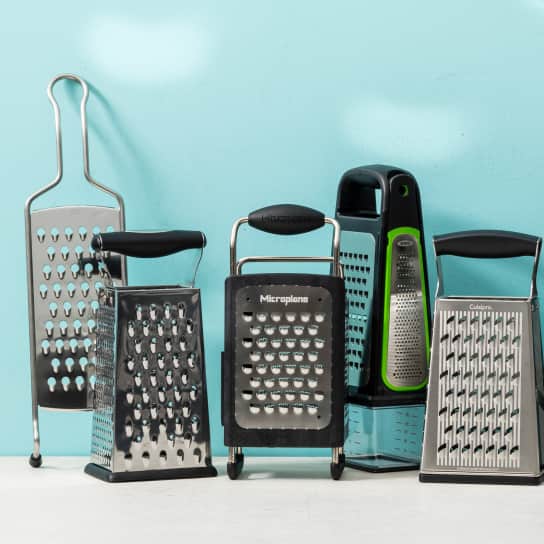
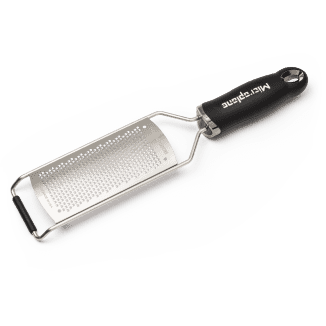
Freshly grated ginger is a common component of recipes both sweet and savory, lending its distinctive aroma to cookies, cakes, and chutneys as well as stir-fries, glazes, sauces, and soups. To get the fine puree we want, we usually reach for our favorite rasp-style grater, the Microplane Premium Classic Zester/Grater ($14.95), or we use the smallest holes on our favorite box grater, the Microplane Specialty Series 4-Sided Box Grater ($34.95). But we've often wondered whether there might be a better option, especially because there exist a number of gadgets specifically intended for grating ginger.
To find the best tool for the job, we rounded up 10 graters priced from $8.00 to $35.64. These tools encompassed a range of sizes, shapes, materials, and grating styles: Some had rasp-style “etched” holes, some had puckered “stamped” holes punched out by a machine, and others—traditional Japanese oroshigane—had either metal teeth or ceramic nubs. Pitting these tools against our winning rasp-style and box graters, we grated a whopping 6 pounds of ginger.
Does Grater Style Really Matter?
With such a range of styles, it was no surprise that the tools produced purees with different textures—some were coarser or more fibrous, some finer, and one made flat shavings of ginger instead of puree. But in practice, these differences didn't matter: Tasters found ginger of every texture acceptable and very similar when eaten raw (added to soy sauce as a dip for tofu). When sautéed in oil as if for a stir-fry, different ginger samples cooked evenly and in roughly the same amount of time, and their flavor and texture were nearly indistinguishable from sample to sample.
That said, grater style did matter when it came to speed, efficiency, and ease of use. Models with etched or stamped holes made quicker work of grating than did those with “crowns” (bigger, ragged-edged etched holes), teeth, or nubs, taking less than a minute to produce 1 tablespoon of puree. Our two favorites were the fastest, producing 1 tablespoon of puree in just 15 seconds; both had etched holes. The worst model, with metal teeth, took more than 4 minutes. To a lesser degree, the size of the grating surface also helped determine speed: The larger the area, the more ground we could cover before starting a new stroke or before the ginger clogged the holes. The best models had at least 5 square inches of surface area.
Models with small etched holes were also less wasteful than the other types, pulverizing and pushing through more puree from a standardized piece of ginger (1 inch long and weighing 14 grams), leaving just 1 to 3 unusable grams of fibrous pulp on the grater face. When we used the same-size chunk on stamped and toothed graters, these models created as much waste as they did puree, and sometimes more—7 to 10 grams of pulp and only 4 to 7 grams of puree. This was because these types of graters usually couldn't break up the fiber as easily as the etched graters could, leaving more of it behind on top of the grater. As a result, we had to grate slightly more ginger with these models in order to yield 1 tablespoon of usable puree. And while none of these graters were exactly easy to clean, since the fibers snag easily on any protuberance and often need to be scrubbed or picked off by hand, the toothed and nubbed graters were particularly challenging.
Evaluating Comfort and Ease of Use
A few other factors made certain graters easier than others to hold and use. Handles that were rubbery and long—at least 4 inches—were more comfortable for hands of all sizes to grip, helping us stabilize the graters. When it came to harvesting the grated ginger, simpler was better: While troughs or special collection bins seemed like they'd be handy, testers found them fussy and more trouble than they were worth. Here again we preferred flat, smooth models with small etched or stamped holes through which the finished puree could fall or be scraped off; broad paddle-shaped versions made it particularly easy to maneuver a knife or spoon across the underside. Waste and puree sat mixed together on top of graters that lacked holes, making it harder to separate out the usable ginger and clean up afterward.
The Best Tools for Grating Ginger
The good news: Our favorite box grater, the Microplane Specialty Series 4-Sided Box Grater ($34.95), made speedy work of grating ginger with its big plane of fine etched holes. If you already own this product or you want to invest in one all-purpose grater, we highly recommend it for grating ginger. It's a little more wasteful than our winner and requires a bit more work to excavate the puree but is otherwise a great option.
But the absolute best tool for the job is the Microplane Home Series Fine Grater—and at $14.95, it's a budget-friendly gadget that expertly completes this task. With a large grating surface and razor-sharp etched holes, it grated a tablespoon of ginger in record time and was the least wasteful model in our lineup, leaving just 1 gram of fibrous material behind. Its large, rubbery handle was comfortable to hold, and even after grating more than 32 tablespoons of ginger—more than a pound's worth—it was still as sharp as when we first used it.