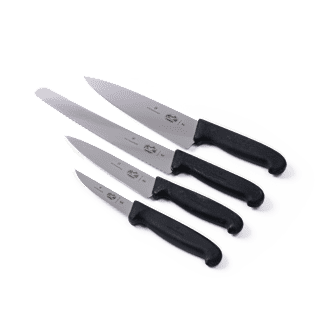


A good knife set offers convenience and money savings over buying blades individually. Our winning knife set is the Victorinox 4-Piece Knife Set with Fibrox Handles, built around our decades-long favorite 8-inch chef’s knife, plus other favorite blades from our reviews, including a 6-inch chef’s/utility knife, 10-inch bread knife, and a paring knife. Our Best Buy is the Mercer Culinary Millennia 3-Piece Starter Set, a true bargain for a knife set less than $100, with our Best Buy chef’s knife, longtime winning 10-inch bread knife, and a paring knife. For a luxurious knife set of high-performance blades, our Upgrade Pick is the Shun Premier 5-Piece In-Drawer Set, a razor-sharp, well-crafted, and handsome set.

Buying a knife set can be helpful if you want a lower, bundled price on essential blades; they make excellent gifts for weddings and graduations, or let you upgrade your knives all at once. With hundreds, maybe even thousands, of knife sets on the market, choosing the right one is difficult.
What’s Included in a Knife Set?
A knife set is a group of kitchen knives packaged by a knife brand, often sold in a storage system such as a wooden knife block. Sets come in a vast variety of sizes, the smallest featuring just a pair of knives such as a chef’s knife and paring knife, all the way up to sets containing upwards of three dozen knives for thousands of dollars. Sets might include chef’s knives, santoku, bread knives, paring knives, utility knives, boning knives, steak knives, cheese knives, and more, plus related accessories such as shears and hones. Everything, including the block, counts as a piece of the set. In our experience, not all sets are compiled of the most useful knives; many seem designed to dazzle by offering the highest number of pieces at the lowest price.

Advantages and Disadvantages of Buying Knife Sets
Knife sets are a good choice if you have a hodgepodge of knives that aren’t working well and want to upgrade them all in one purchase. You may want to skip sets and buy à la carte instead if you like to research each type of blade, don’t mind an eclectic collection with varying handles, and want the absolute best in each style. By buying knives one by one, you may spend less upfront while you establish how you personally like to cook and determine which blades you actually need.
Owning a few well-chosen knives is better than an entire block of subpar knives, experts said. “Pick the knives that are going to be the most crucial with the budget you have, rather than … lowering the general quality level of the most important ones by raising the quality level of the least important ones,” advised Josh Donald of Bernal Cutlery in San Francisco.
A bigger problem with sets? Any single brand doesn’t necessarily make the best version of every type of knife. We’ve always tested knives according to their purpose—from chef’s knives to serrated, paring, utility, slicing, and more. We’ve learned which features matter most with each type of knife. Our winners are the best individual knives in that category and inevitably come from different brands.
Our challenge in testing knife sets was to find the sweet spot: sets offering a well-curated choice of essential, high-performance blades, and at a savings over buying them one by one.

Pick the knives that are going to be the most crucial with the budget you have, rather than … lowering the general quality level of the most important ones by raising the quality level of the least important ones.
—Josh Donald, Bernal Cutlery
Knife Blocks Aren’t Essential to Sets
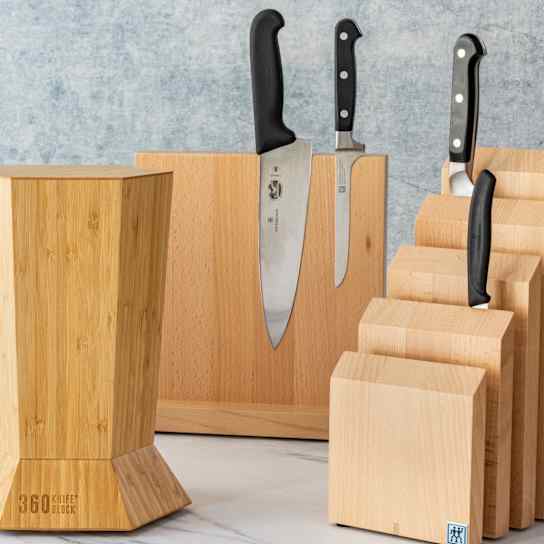
While we’re fans of being organized in the kitchen, we don’t think having a traditional knife block to store knives is a deal-breaker when choosing a knife set. In fact, most sets in our lineup included no block or other storage system. We have separately reviewed and recommend magnetic knife strips, universal knife blocks, and individual blade guards.
Do You Save Money by Buying a Knife Set?
Yes, in general you save by buying knives as a set. In our lineup, savings were as high as 38 percent. Not all knife sets offer savings, though. One set actually cost more than purchasing the same pieces individually.

How We Chose Knife Sets to Test
We used our years of knife testing expertise to select compelling sets at a range of prices. We began with sets from companies that produce knives that have won (or scored highly) in previous testings. We only included sets that include the essential blades that we affectionately refer to as The Big Three: a chef’s knife, a serrated/bread knife, and a paring knife. Collectively, these knives cover most tasks.
We aimed for quality over quantity: The biggest set in our lineup is relatively modest in scope compared to some of the supersized options you can find online. It has four versatile knives, a pair of shears, a hone, and a block in which to store it all.
All of the chef’s knives were sharpened to a narrow angle, about 15 degrees on each side of the blade, which has been our preference in years of testing. A narrower edge angle feels more precise, slicing food rather than wedging it apart.
As we set about chopping, slicing, mincing, hulling, and paring a variety of foods—from herbs to onions to apples to shallots—breaking down whole raw chickens, slicing crusty loaves and cutting towering sandwiches, and hulling delicate strawberries and supreming oranges, we considered which sets made every task easier with the most crisply cut, precise results across the board.


What to Look for
- The Big Three: Our top-rated sets had strong players in all three key positions: chef’s knife, bread knife, and paring knife. If you purchase only these sets and no other blades, you’ll be well equipped for everyday cooking and even trickier work such as boning chicken or trimming pork loins too.
- Sharp, Well-Designed Blades: The best knives offered nearly surgical precision with sharp, well-shaped blades that gave us excellent results as we minced, sliced, pared, or chopped.
- Grippy, Ergonomic Handles: Hands become wet or greasy when we’re busy in the kitchen, so our preferred knives offer an excellent grip, whether we hold them by the handle or use a pinch grip on the blade. The best handles had a neutral shape, which made them comfortable to hold in a variety of positions as we diced onions, chopped squash, hulled berries, and more.

- Optimal Blade Lengths: We preferred knives with appropriate lengths to do the jobs we require, such as bread knives with long, 10-inch (or more) blades that won’t get lost in large loaves, and 3- to 4-inch paring knives that are compact and agile when we’re peeling apples or hulling berries in hand. Our favorite chef’s knives have 8-inch blades, which years of testing has proved to be the best length for most people.


Serrated bread knives with blades at least 10 inches long had no trouble neatly slicing oversized rustic loaves, but some knife sets had 8-inch bread knives that got lost in the loaf and left us struggling to cut even slices.
Nice to Have
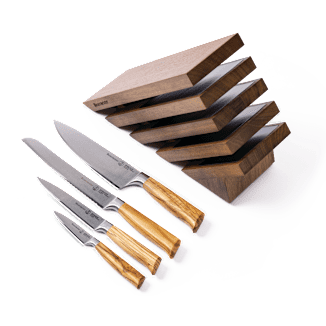
- Easily Visible, Accessible Storage System: We love a good storage system, but it’s not essential for it to come with our knives. And we’re not huge fans of the traditional wooden block that presents users with a bunch of nearly identical handles and a guessing game. By contrast, we enjoyed sets that took newer approaches, including an in-drawer slotted holder and an innovative open block formed by magnetic wooden shelves.
What to Avoid
- Heavier, Duller Knives: Heavier knives and those that arrived duller than we wished made our hands tired and were not as easily controlled, so precise cuts were harder to accomplish. Blades slipped off instead of cutting in; they made onions spray and got wedged in butternut squash.
- Over- or Undersized Blades or Handles: We weren’t happy with dinky 8-inch bread knives that got lost in oversized artisan loaves or bulky-handled paring knives that felt awkward for those with smaller hands during delicate tasks such as hulling berries.


When using a paring knife in hand, such as for hulling strawberries, oversized handles on some knives (left) felt bulky. We preferred smaller handles (right) that fit in our hands comfortably.
- Unnecessary Pieces: We’d rather skip sets that add mediocre blocks, hones, shears, or other items just to plump up the piece count in the set.
The Tests
- Test sharpness of chef’s knives when new and again at end of testing
- With chef’s knives: Dice onion, mince parsley, break down whole raw chicken, and chop butternut squash
- With bread/serrated knives: Slice crusty sourdough loaf, slice tomatoes, and quarter loaded BLTs
- With paring knives: Mince shallot; hull and quarter strawberries; peel and segment orange; and peel, quarter, core, and slice apples
- With utility knives: Quarter mushrooms and slice cooked, skin-on chicken breasts
- With shears: Break down whole raw chicken, snip lengths of twine, and cut chives
- With hones: Touch up slightly dull knife
- With blocks: Remove and replace all knives in random order, then examine for any dings, dirt, or damage after testing
- Wash all items by hand throughout testing
How We Rated
- Performance: We sought sets with the best assortment of sharp, well-designed knives that made neat cuts precisely where we wanted them, through a variety of foods, with the least effort.
- Ease of Use: We considered how comfortable the knives were to hold in a variety of positions. We also noted if the storage systems, when included, made it simple and efficient to put away and retrieve items.
- Cleanup/Durability: We evaluated whether the blades arrived and remained sharp throughout testing and if their handles and storage systems didn’t trap dirt and were easy to clean.