An instant-read probe thermometer can tell you the temperature inside your food, and an oven thermometer can check if your oven is where it needs to be. But when it comes to knowing exactly how hot a pan is, you’re left to guess.
That’s where an infrared thermometer comes in.
Just point the tool at a pan and in seconds, you know its temperature. But how do you use that info if you don’t know what temperature you should be targeting? Let me tell you.
Sign up for the Cook's Insider newsletter
The latest recipes, tips, and tricks, plus behind-the-scenes stories from the Cook's Illustrated team.
We did some testing and came up with general guidelines for temperatures to shoot for when cooking pancakes, omelets, steaks, and more. We’ve also got guidelines for monitoring the temperature of yogurt and bread that’s proofing.
Griddle Temperature for Pancakes: 365 Degrees
We’re all used to cooking a first test pancake to see if the pan’s too hot or too cold and then tossing it out; that’s just part of the pancake process. Until now. For pancake perfection, you want the pan surface to be right around 365 degrees. That’s hot enough to cook them through quickly, but not so hot that they’ll scorch before the middle is set.
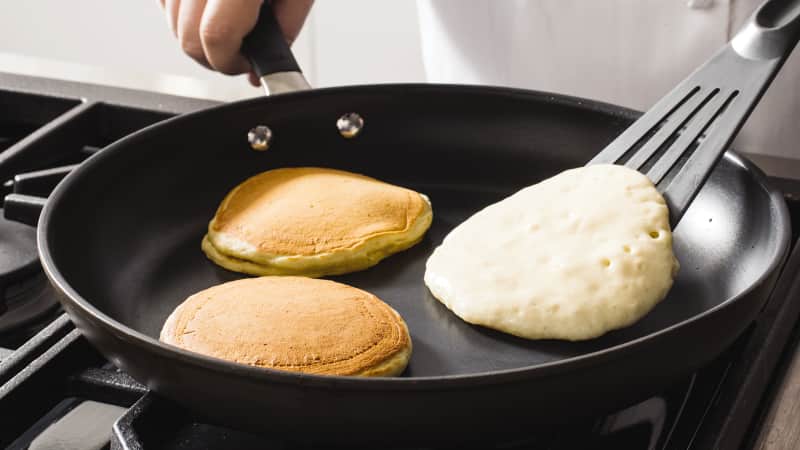
And keep taking readings after each batch to make sure the heat is exactly where you want it.
Oil Helps with Accuracy
In order to get an accurate reading, it helps to have a thin film of oil on top of the pan. Oil emits infrared at a known rate, whereas different metals can have different emissivities. Read more about emissivity here (how well any object emits thermal radiation, measured on a scale from 0 to 1).
Pan Temperature for Omelets: 250 Degrees
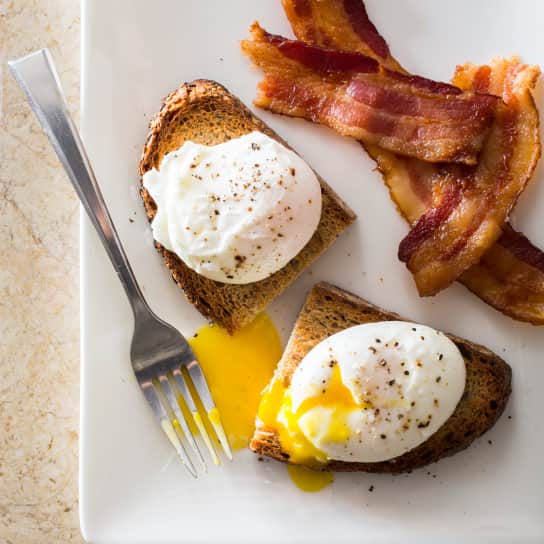
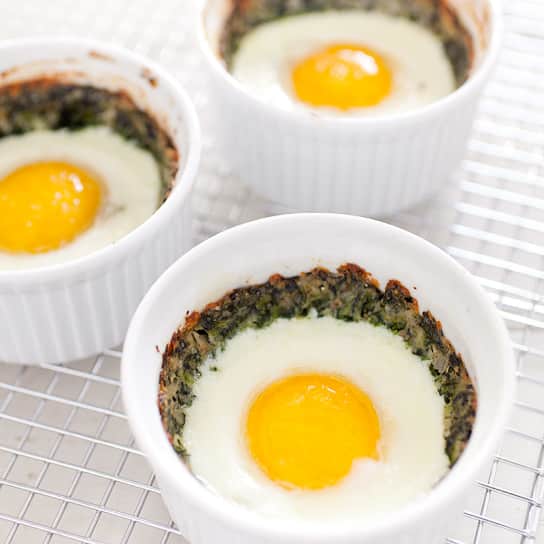
Egg cooking is notoriously sensitive, and getting the right delicate-not-gooey texture sometimes feels like a matter of luck, not science. But it’s science.
For an omelet that’s delicate as can be, without a hint of browning, the pan should hold steady around 250 degrees. For a heartier scramble, you can crank it up to 300 degrees and still get tender curds.

Temperature of Your Outdoor Pizza Oven: 700-750 Degrees
One of the most common uses for infrared thermometers is outdoor pizza ovens, which get nicely hotter than a home oven can. In our testing, we found that the best pizzas were made when the deck of the oven read at a searing 700-750degrees.


Cook's Science
Understanding how ingredients work—at the molecular level as well as at the stovetop—allows you to amplify flavor and perfect their structure when you cook.
Save 60%Pan Temperature for Steak: 450 Degrees
To give steak a proper sear, the pan should be at least 450 degrees. Any cooler than that and it will take too long for the surface to brown, which means the meat beneath the surface will start to overcook and turn gray while you wait. Infrared has the answer. Again, a light coating of oil on the pan will help with accuracy (and deliciousness).

Pan Temperature for Toasting Nuts and Breadcrumbs: 325 Degrees or Less
We often give nuts and/or breadcrumbs a quick toast in a pan to maximize their flavor before using them—and we sometimes scorch them. Make sure the pan is no hotter than 325 degrees, and you’ll never have another smoky, blackened nut.

Temperature for Homemade Yogurt: 100-110 Degrees
In my recipe for yogurt, without a dedicated machine, you can incubate milk in your oven to make homemade yogurt, as long as you keep an eye on the temperature. The milk should remain in the yogurt-making bacteria’s favorite temperature zone: between 100 and 110 degrees. The IR thermometer lets you check the temperature of your milk jars without moving, opening, and potentially contaminating them with a probe thermometer.

Temperature for Proofing Dough: About 75 Degrees
We like to proof bread dough right around 75 degrees: warm enough so it rises, but not so warm that it goes too fast and generates boozy flavor and weak structure. You can buy a proofing box or build your own. Point the IR thermometer right at the dough and make sure it’s proofing just right.


Pizza al Taglio with Prosciutto and Figs
Tender and airy yet substantial, this Roman pie is often topped like an open-faced sandwich. It's also one of the easiest pizzas you'll ever make.
Get the RecipeFor all of your temperature readings, make sure to follow ourguide to using an infrared thermometer to ensure you get accurate numbers.